If you have ever paused mid-sentence wondering whether to say supposably or supposedly, you are not alone. Supposedly is the word almost everyone reaches for. It means something is believed or claimed to be true, even though there is no real proof behind it. Supposably is different. It is a rare but genuine word that means something is capable of being imagined or conceived as possible.
Most native speakers use supposedly correctly without thinking twice, then hear supposably and assume it must be a mistake. That reaction makes sense because supposably shows up so rarely in everyday speech and writing. But treating it as pure error misses something useful. Knowing the real difference helps you avoid sounding unsure in formal writing, and it helps you understand why some speakers use supposably on purpose rather than by accident.
Supposably vs Supposedly: The Simple Difference
Here is the short version before we go further.
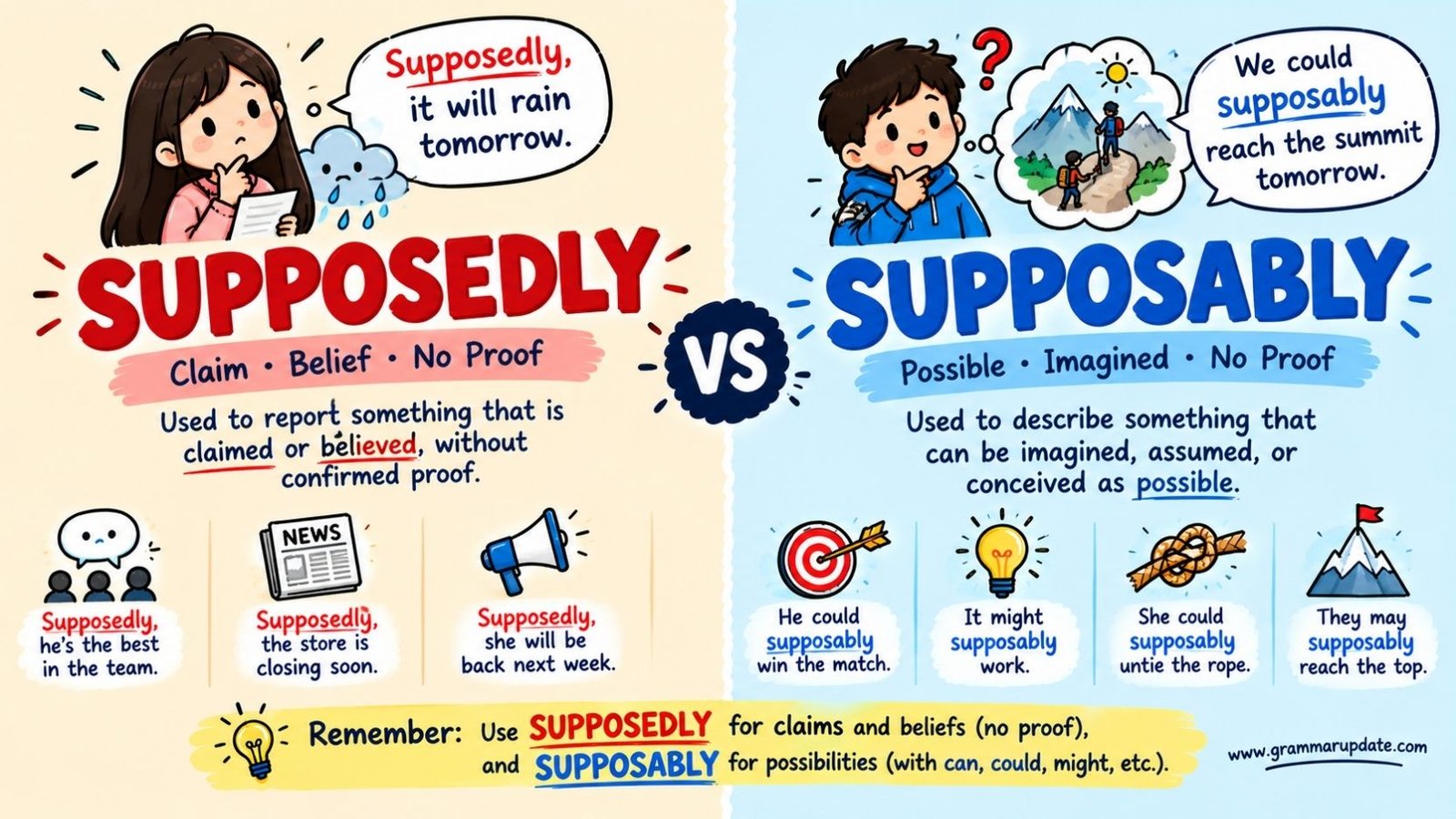
Supposedly means “according to what people claim or believe, without solid proof.” It carries a hint of doubt.
Supposably means “as can be imagined, assumed, or conceived as possible.” It leans toward possibility rather than doubt.
They look alike, they sound alike in fast speech, and they even share the same root idea of supposing something. But they point in slightly different directions: one questions a claim, the other opens up a possibility.
| Word | Core Meaning | Feeling It Carries | How Often It Is Used |
| Supposedly | According to claims or belief, not confirmed fact | Doubt, skepticism | Very common |
| Supposably | As may be imagined or conceived as possible | Openness, possibility | Rare |
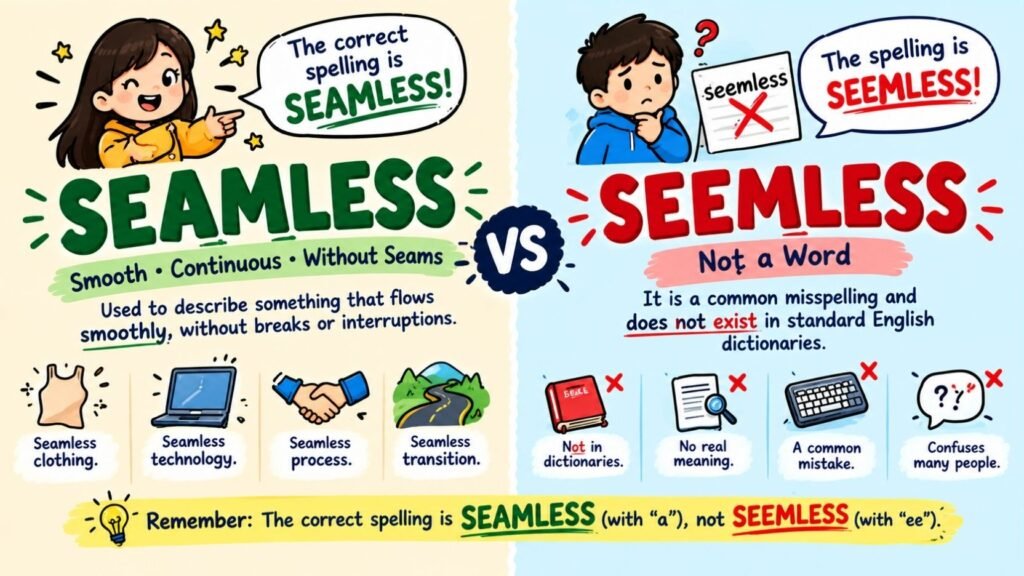
Read More: Seemless Or Seamless
What Does Supposedly Mean?
Supposedly is an adverb built from the word supposed. You use it when you are reporting something you heard, read, or were told, but you cannot vouch for it personally. It signals that the information came from somewhere else, and that you are keeping a small distance from it.
Think of supposedly as a verbal shrug. It lets you pass along information while quietly protecting yourself from being wrong. News reports, gossip, secondhand stories, and rumors all lean on this word constantly.
A close cousin of supposedly is allegedly. Both words report a claim without confirming it. Allegedly tends to show up in legal or formal contexts, often connected to accusations. Supposedly is more casual and works in everyday conversation.
Examples of supposedly in a sentence:
- Supposedly, the restaurant closes at midnight, but nobody seems to know for sure.
- He is supposedly the fastest runner on the team, though I have never seen him race.
- The bridge was supposedly built in the 1800s, according to the old town records.
Notice the pattern. In each sentence, supposedly signals that the speaker is repeating a claim rather than stating a confirmed fact.
What Does Supposably Mean?
Supposably is also an adverb, but it comes from a different root: supposable, meaning “able to be supposed” or “possible to imagine.” Where supposedly reports a claim, supposably describes a possibility.
This word almost always pairs with modal verbs such as could, might, may, or would. That pairing is a strong clue for telling the two words apart. If you can naturally slot in could or might right before the word, supposably usually fits better than supposedly.
Examples of supposably in a sentence:
- We could supposably finish the project early if everyone stays focused.
- A determined hiker might supposably reach the summit before sunset.
- With enough practice, she could supposably learn the entire piece in a week.
In each case, the sentence is not reporting a rumor. It is describing something that is realistically possible, even if it has not happened yet.
Is Supposably A Real Word?
Yes, supposably is a real word, and dictionaries such as Merriam Webster and Dictionary.com both confirm this. It has its own entry, its own history, and a meaning distinct from supposedly. The confusion comes from how similar the two words sound, especially in fast or casual speech, not from supposably being invented or fake.
That said, supposably is genuinely uncommon. Many careful writers avoid it entirely because readers so often assume it is a typo. If your goal is to be instantly understood, words like presumably or conceivably often communicate the same idea with far less risk of being misread as a mistake.
So the honest answer sits in the middle. Supposably is not made up, and using it correctly is not wrong. But it is rare enough that most writers get more mileage out of a more familiar synonym.
Supposably Grammar: Part of Speech and Structure
Both supposedly and supposably are adverbs. Adverbs typically describe how, when, or to what degree something happens, and both of these words modify an idea of certainty or possibility rather than a physical action.
Supposably is built from the adjective supposable plus the ending ably, following the same pattern as words like reasonably or comfortably. Supposedly is built from the past participle supposed plus ly, the same pattern found in words like allegedly or reportedly.
A simple way to remember the grammar difference:
- Supposedly = supposed + ly → based on a claim
- Supposably = supposable + ably → based on possibility
Because supposably usually appears next to a modal verb such as could or might, it often sits inside a clause describing a hypothetical outcome rather than a flat statement of fact. Supposedly, by contrast, frequently opens a sentence or attaches directly to a verb like is, was, or has.
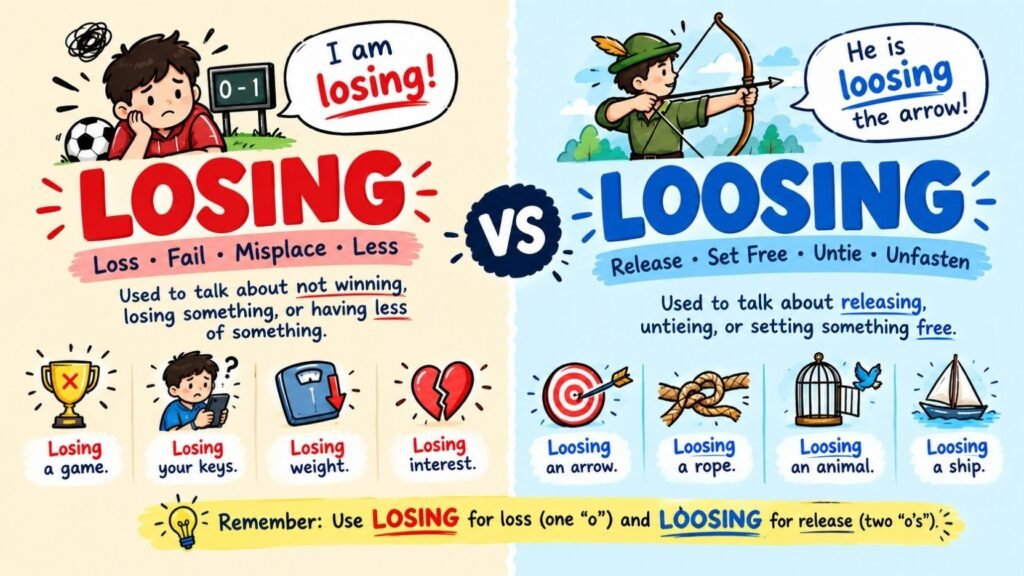
Read More: Losing Or Loosing
How to Pronounce Supposably and Supposedly
Mispronunciation is a major reason these two words get tangled together. When people speak quickly, the middle syllables blur, and supposedly can come out sounding almost like supposably.
Supposedly is pronounced: suh POE zid lee
Supposably is pronounced: suh POE zuh blee
The stress falls on the second syllable in both words, but the sound right after that stressed syllable is where they split apart. Supposedly has a clear “zid” sound in the middle. Supposably has a softer “zuh” sound followed by “blee.” Saying both words slowly, side by side, is the easiest way to hear the difference and stop mixing them up in speech.
Origin Of Supposedly And Supposably
Both words trace back to the verb suppose, which entered English from Old French and ultimately from Latin, carrying the idea of placing something under consideration or assuming it to be true.
Supposedly grew directly from the adjective supposed, which describes something assumed or believed. Add the common adverb ending ly, and you get a word for describing things according to belief rather than confirmed fact.
Supposably followed a slightly different branch. It grew from supposable, an older adjective meaning capable of being supposed or imagined. According to Dictionary.com, supposably has appeared in English writing for centuries, including in nineteenth-century literature, long before it became a target of modern criticism on social media.
The word did not spring from a mispronunciation. It has an independent history. What changed over time is usage: supposedly became common and useful in everyday speech, while supposably faded into rare, mostly written use.
Supposably vs Supposedly: Side by Side Examples
Seeing the words next to each other in matching situations makes the contrast easier to feel.
| Situation | Using Supposedly | Using Supposably |
| Talking about a rumor | Supposedly, the store is closing next month. | Not a natural fit here, since this is a claim, not a possibility. |
| Talking about a hypothetical outcome | Not a natural fit here, since nothing is being claimed. | With more funding, the team could supposably finish a year early. |
| Describing something unverified | The painting is supposedly worth a fortune. | Not a natural fit here. |
| Describing a realistic possibility | Not a natural fit here. | A skilled cook might supposably recreate that dish at home. |
A quick way to test which word you need: ask yourself whether you are repeating a claim someone else made, or describing something that could reasonably happen. Claims lean toward supposedly. Possibilities lean toward supposably.
Common Mistakes With Supposedly and Supposably
❌ Incorrect: He is supposably the best chess player in the club.
✅ Correct: He is supposedly the best chess player in the club.
This sentence is reporting a claim about his skill, not describing a hypothetical possibility, so supposedly is the right choice.
❌ Incorrect: With practice, she could supposedly master the routine in a week.
✅ Correct: With practice, she could supposably master the routine in a week.
Here the sentence is describing a realistic future possibility tied to a modal verb, which fits supposably far better.
⚠️ A useful habit: read your sentence aloud and ask whether you are describing a rumor or a possibility. If the sentence still makes sense without the word “supposedly,” but changes meaning when you remove “could” or “might,” you are likely in supposably territory.
Most usage guides, including Writing Explained, note that supposably is frequently treated as an outright misspelling of supposedly in casual writing. That view is common, but not entirely accurate. The two words are historically distinct, even though supposedly is used correctly far more often in modern English.
Synonyms for Supposedly and Supposably
Understanding nearby words helps sharpen the meaning of each term.
| Word | Closest In Meaning To | Notes on Usage |
| Allegedly | Supposedly | More formal, often used in legal or journalistic contexts |
| Reportedly | Supposedly | Emphasizes that information came from a report or source |
| Presumably | Supposably | A more common, easily understood alternative |
| Conceivably | Supposably | Often the safest replacement in formal writing |
| Possibly | Supposably | Simpler and widely understood |
If you like the meaning behind supposably but worry readers will misread it as a typo, presumably or conceivably usually deliver the same idea without the confusion.
Supposedly Vs Allegedly
These two words are close enough that people often ask about them together. Supposedly is casual and broad, fitting almost any unverified claim, from gossip to news to hearsay.
Allegedly is more formal and is strongly associated with accusations, especially in legal or journalistic writing, where it protects the writer from stating guilt as fact. In everyday conversation, supposedly is the more natural, less loaded choice.
Supposedly In Popular Culture
Supposedly shows up often outside of grammar guides too. David Foster Wallace’s essay collection titled after the phrase “a supposedly fun thing” uses the word to capture a sense of doubt about an experience that was marketed as enjoyable but did not quite live up to the claim. That usage lines up exactly with the core meaning: something is claimed to be one way, but the truth is left open to question.
Supposably, meanwhile, gained unexpected fame from the sitcom Friends, where a character confidently insists supposably is a real word during an argument about grammar. That scene is often the first place many English speakers hear the word at all, which explains why so many people search for confirmation that it truly exists.
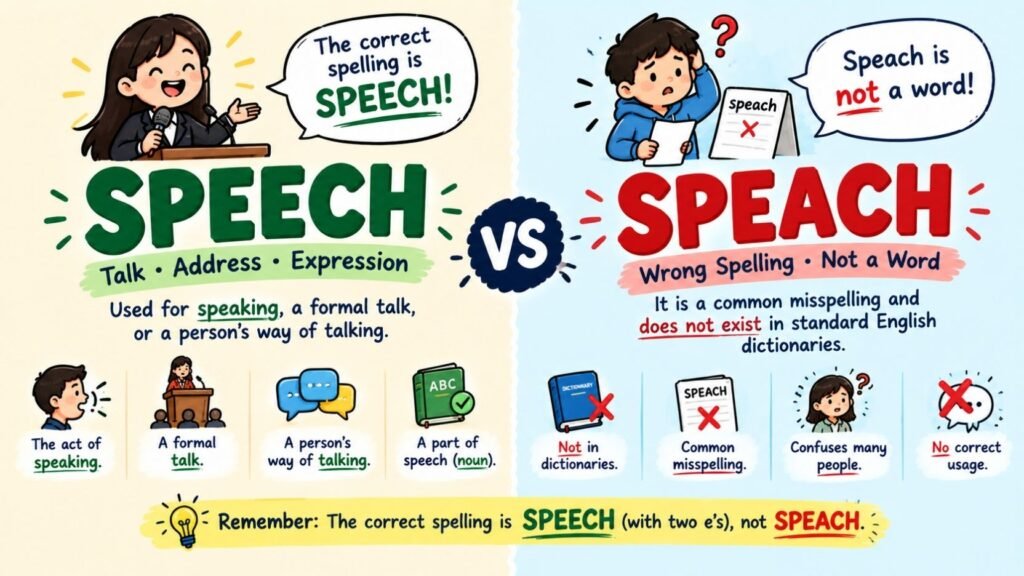
Read More: Speach Or Speech
Frequently Asked Questions
What does supposedly mean?
Supposedly means according to what is claimed or believed, without confirmed proof. It signals that the speaker is repeating information rather than stating a verified fact.
What does supposably mean?
Supposably means as may be imagined, assumed, or conceived as possible. It describes something that could realistically happen, often paired with words like could or might.
Is supposably a real word?
Yes. Supposably is a genuine word with its own dictionary entry and history, separate from supposedly, even though it is used far less often.
Is it supposedly or supposably?
In most everyday situations, supposedly is the correct choice, since it fits claims and rumors. Supposably only fits when you are describing a realistic possibility, usually alongside could or might.
How do you pronounce supposably?
Supposably is pronounced suh POE zuh blee, with the stress on the second syllable.
What is the difference between supposedly and allegedly?
Both report unverified claims, but allegedly is more formal and usually tied to accusations, while supposedly fits everyday conversation and casual claims.
Why do people think supposably is not a word?
Because it sounds so similar to supposedly and appears so rarely, many assume it is a mispronunciation or typo rather than recognizing its distinct, older meaning.
What part of speech are supposedly and supposably?
Both words are adverbs, built from the adjectives supposed and supposable.
Can supposedly and supposably be used interchangeably?
Not accurately. Supposedly reports a claim or belief, while supposably describes a possibility, so swapping them can change the meaning of a sentence.
What is a simpler word to use instead of supposably?
Presumably or conceivably communicate a similar meaning and are far more commonly understood by readers.
Final Takeaway
Supposedly and supposably may sound like near twins, but they carry different jobs in a sentence. Supposedly reports a claim you cannot fully vouch for, carrying a light touch of doubt. Supposably describes something that could reasonably happen, leaning on possibility rather than skepticism. Knowing which meaning you actually intend is the fastest way to choose correctly between them.
If you ever catch yourself hesitating, ask a simple question: am I repeating a claim, or describing a possibility? For claims, reach for supposedly, the word nearly everyone already uses correctly. For possibility, supposably is technically available, though presumably or conceivably will usually serve your reader better and avoid any confusion about whether you meant to write a real word at all.

Zunaira Qasim is the author and creator of Gramvixo, dedicated to making English grammar easier for learners and everyday writers. With 4 years of experience researching grammar, confusing words, word choices, and common language mistakes, they create clear and practical content that helps readers understand English and use it with confidence.