Prouder or more proud is a question that trips up many English speakers. Both forms exist, but only one is considered grammatically standard today. This guide explains the rule clearly, with examples and common mistakes. By the end, you will know exactly which form to use and when.
The confusion happens because proud can technically take either comparative form. English usually allows short adjectives to add “er,” and longer ones use “more.” Proud sits right in the middle, which is why people hesitate between the two. Understanding the grammar rule removes the guesswork completely and permanently.
Prouder Or More Proud: The Short Answer
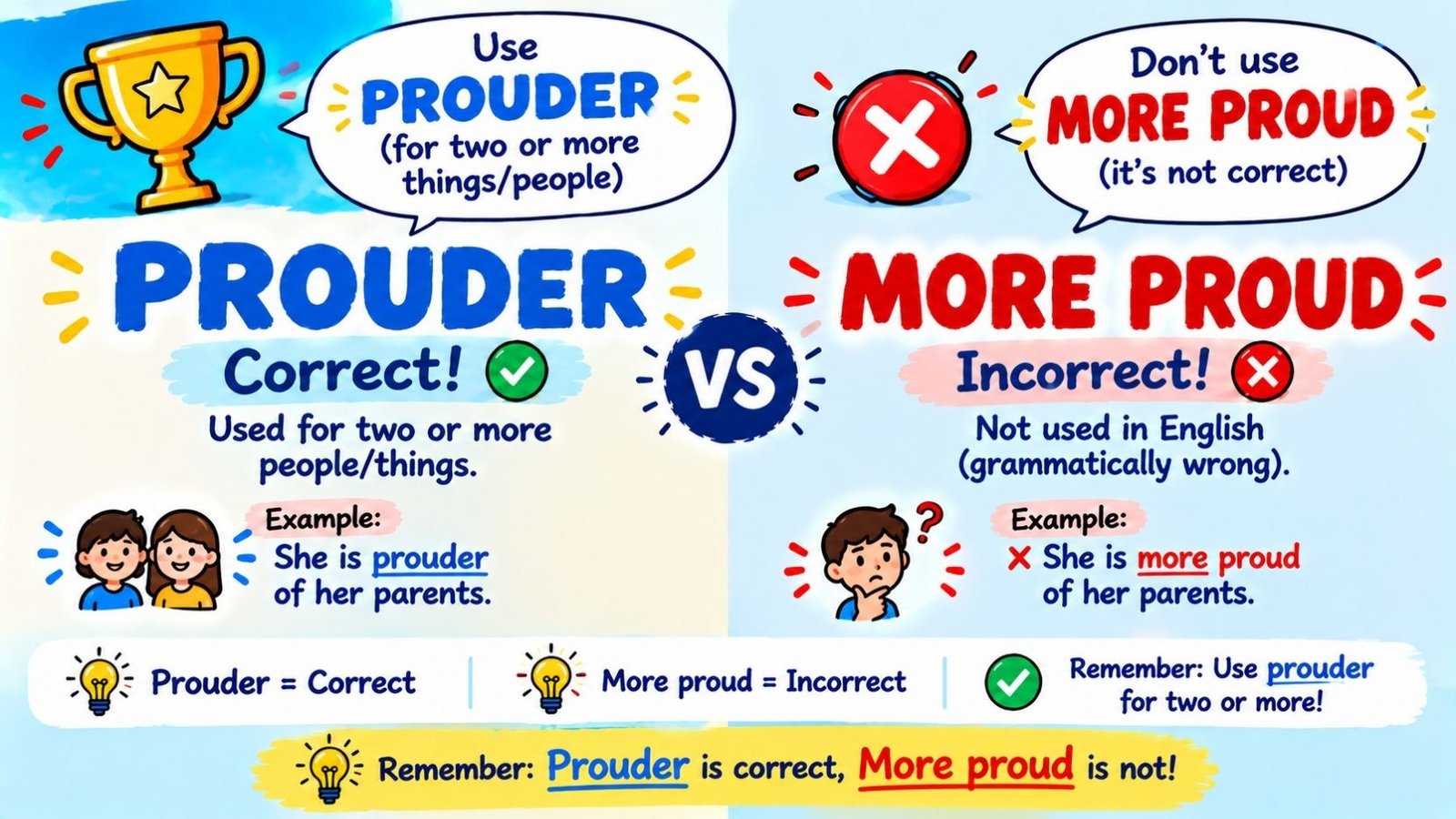
Prouder is the correct and standard comparative form of proud in modern English.
Proud is a one-syllable adjective, so it follows the regular comparative rule. You simply add “er” to the base word. This gives you prouder, not more proud.
- ✅ Correct: I am prouder of you than ever.
- ❌ Incorrect: I am more proud of you than ever.
“More proud” is not officially wrong, but it sounds unnatural to most native speakers. Style guides and grammar authorities consistently recommend prouder as the standard choice.
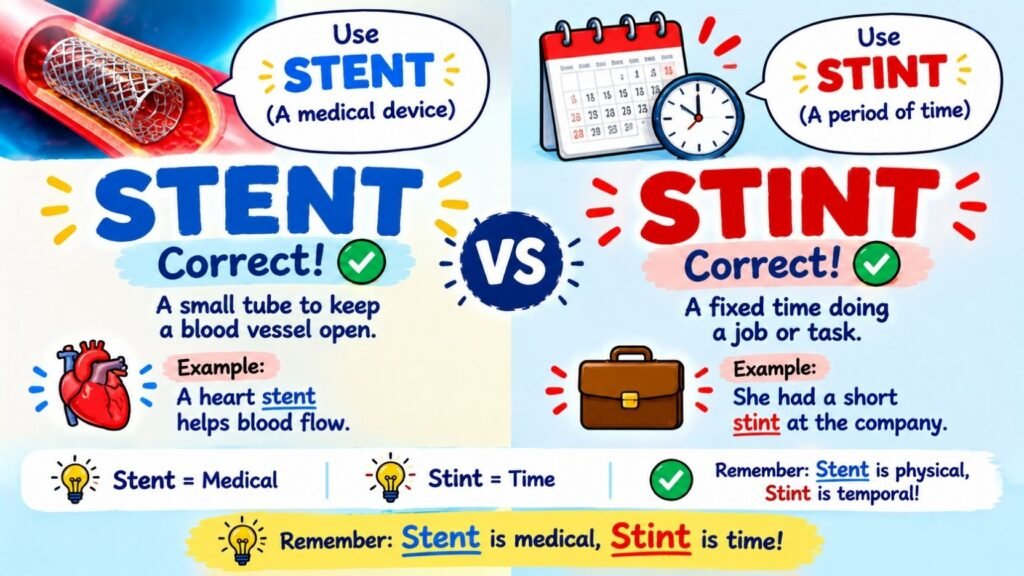
Read More: Stent Vs Stint
Why Prouder Is The Preferred Form
English grammar has a simple rule for short adjectives.
Adjectives with one syllable almost always take the “er” ending for the comparative form. Proud fits this pattern perfectly, even though it does not look like a typical one syllable word at first glance.
| Adjective | Syllables | Comparative Form |
| Proud | 1 | Prouder |
| Loud | 1 | Louder |
| Fast | 1 | Faster |
| Tall | 1 | Taller |
Notice the pattern. Loud becomes louder, not more loud. Proud follows the exact same rule and becomes prouder, not more proud.
💡 Tip: If a one syllable adjective sounds awkward with “er,” it usually still needs it anyway. Trust the rule over your first instinct.
Is Prouder A Word?
Yes, prouder is a real and fully accepted English word.
It appears in every major dictionary as the standard comparative form of proud. There is nothing informal, slang, or incorrect about it. Some people question it simply because it looks unusual on the page.
Prouder or more proud both technically communicate the same idea. However, only prouder matches the grammar rule that English speakers expect for short adjectives like this one.
Prouder Vs More Proud: Is More Proud Ever Acceptable?
More proud is not grammatically incorrect, but it is considered nonstandard.
Some speakers use more proud for emphasis or rhythm in casual speech. This happens naturally in conversation, especially when someone wants a sentence to sound a certain way.
- More proud may appear in casual speech or informal writing.
- It is rarely used in edited, professional, or academic writing.
- Grammar checkers and style guides typically flag it as incorrect.
- Prouder remains the expected form in nearly every context.
⚠️ Common mistake: Writers often reach for “more proud” because it feels more formal or emphatic. In reality, prouder is both correct and perfectly natural.
Couldn’t Be Prouder Or More Proud: Which Phrase Is Right?
“Couldn’t be prouder” is the correct and widely used version of this popular phrase.
This expression shows up constantly in speeches, social media captions, and everyday conversation. People use it to express strong pride about an achievement or a person.
- ✅ Correct: I couldn’t be prouder of my team.
- ❌ Incorrect: I couldn’t be more proud of my team.
- ✅ Correct: We couldn’t be prouder of this community.
- ❌ Incorrect: We couldn’t be more proud of this community.
Even though “couldn’t be more proud” appears often online, it still breaks the standard comparative rule. Prouder remains the version recommended by grammar authorities and style guides.
Grammar Explanation: How Comparative Adjectives Work
English adjectives form comparatives in two main ways, depending on length.
Short adjectives, usually one or two syllables, generally add “er” at the end. Examples include fast, faster; small, smaller; and proud, prouder.
Longer adjectives, usually three or more syllables, use “more” before the word instead. Examples include beautiful, more beautiful; and difficult, more difficult.
| Adjective Length | Rule | Example |
| One syllable | Add “er” | Proud → Prouder |
| Two syllables ending in y | Change y to ier | Happy → Happier |
| Three or more syllables | Use “more” before the word | Beautiful → More beautiful |
Proud clearly falls into the first category. That places it firmly in the “add er” group, which is exactly why prouder is the standard and expected form.
Read More: Favourites Or Favorites
Prouder Or More Proud In A Sentence
Seeing the correct form used naturally helps the rule stick.
- She felt prouder after finishing her first marathon.
- He has never been prouder of his daughter’s achievement.
- Our parents grew prouder with every award we won.
- I am prouder of this project than any other.
Each sentence uses prouder smoothly and naturally. Reading them aloud shows exactly why prouder sounds correct while more proud feels forced and unnecessary in comparison.
Common Mistakes With Prouder Or More Proud
Writers make a few predictable mistakes with this comparative form.
Mistake 1: Using more proud out of habit
❌ Incorrect: I am more proud than I have ever been.
✅ Correct: I am prouder than I have ever been.
Many writers default to “more” because it feels safe or formal. With proud, this habit actually breaks the grammar rule instead of following it.
Mistake 2: Doubling the comparative
❌ Incorrect: She is more prouder than her sister.
✅ Correct: She is prouder than her sister.
This mistake combines both comparative forms into one sentence. Only one comparative marker is needed, so choose either “more” or “er,” never both together.
Mistake 3: Assuming more proud sounds more formal
❌ Incorrect: The board is more proud of this outcome.
✅ Correct: The board is prouder of this outcome.
Formality does not change the grammar rule here. Prouder remains correct in formal writing, everyday speech, and professional communication alike.
Prouder Or More Proud: British English Vs American English
This grammar rule stays consistent across both major English dialects.
British English and American English both treat proud as a short adjective. Neither dialect officially prefers more proud over prouder in standard writing or speech.
- UK usage: Prouder is standard in British English writing and speech.
- US usage: Prouder is standard in American English writing and speech.
- Casual speech: More proud sometimes appears informally in both dialects.
- Formal writing: Prouder is expected across UK and US style guides.
So prouder or more proud uk searches and US searches lead to the same answer. Regional dialect does not change which comparative form is grammatically correct here.
Origin Of Proud And Prouder
Proud comes from Old English and Old French roots related to bravery and dignity.
Over centuries, the meaning shifted toward self-respect, satisfaction, and confidence in achievement. The comparative form prouder developed naturally alongside the base word, following standard English grammar patterns for short adjectives.
This is not a modern shortcut or informal invention. Prouder has been the grammatically expected comparative form for as long as proud has existed as a common English adjective.
Synonyms And Related Words
Understanding related words helps clarify how proud behaves compared to similar adjectives.
| Word | Meaning | Comparative Form |
| Proud | Feeling satisfaction or honor | Prouder |
| Pleased | Feeling happy about something | More pleased |
| Satisfied | Feeling content with a result | More satisfied |
| Confident | Feeling sure of oneself | More confident |
Notice that pleased, satisfied, and confident all use “more” because they contain two or more syllables. Proud stands apart because it is genuinely a one syllable word, despite sometimes feeling longer.
Quick Reference: Prouder Or More Proud
Use this simple checklist whenever you are unsure which form to choose.
- ✅ Use prouder in everyday writing and speech.
- ✅ Use prouder in professional or academic writing.
- ✅ Use prouder in phrases like “couldn’t be prouder.”
- ❌ Avoid more proud in formal or edited writing.
- ❌ Avoid combining both forms, such as “more prouder.”
💡 Tip: If you are ever unsure, say the sentence aloud. Prouder almost always sounds smoother and more natural than more proud.
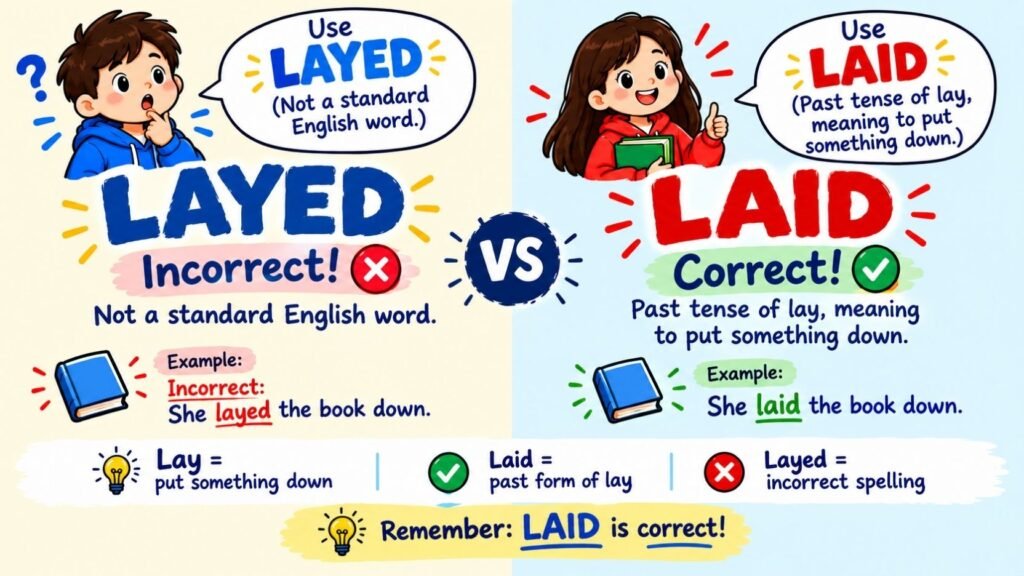
Read More: Layed Vs Laid
Frequently Asked Questions
Is it prouder or more proud?
Prouder is the correct and standard comparative form of proud in English.
Is prouder a word?
Yes, prouder is a real word and the accepted comparative form of proud.
Is more proud grammatically wrong?
It is not strictly wrong, but it is nonstandard and rarely used in formal writing.
Which is correct, couldn’t be prouder or couldn’t be more proud?
Couldn’t be prouder is correct and far more common in natural English usage.
Why does proud use “er” instead of “more”?
Proud is a one syllable adjective, and short adjectives typically take the “er” ending.
Is prouder or more proud used differently in the UK?
No, prouder is standard in both British English and American English writing.
Can you say more proud in casual conversation?
Yes, some speakers use it casually, though prouder remains the grammatically expected form.
Is it correct to say more prouder?
No, this combines two comparative forms and should always be avoided in writing.
Final Thoughts
Prouder or more proud comes down to one simple, well-established grammar rule. Proud is a short adjective, so it takes the standard “er” ending. Prouder is correct, natural, and appropriate in nearly every writing context. More proud is not strictly wrong, but it remains the less standard choice.
Whenever you feel unsure, remember how proud behaves like loud, fast, or tall. Each of these short adjectives simply adds “er” to form the comparative. Choosing prouder keeps your writing accurate, natural, and aligned with standard English grammar. That small choice makes your sentences sound more polished and more confident.

Zunaira Qasim is the author and creator of Gramvixo, dedicated to making English grammar easier for learners and everyday writers. With 4 years of experience researching grammar, confusing words, word choices, and common language mistakes, they create clear and practical content that helps readers understand English and use it with confidence.