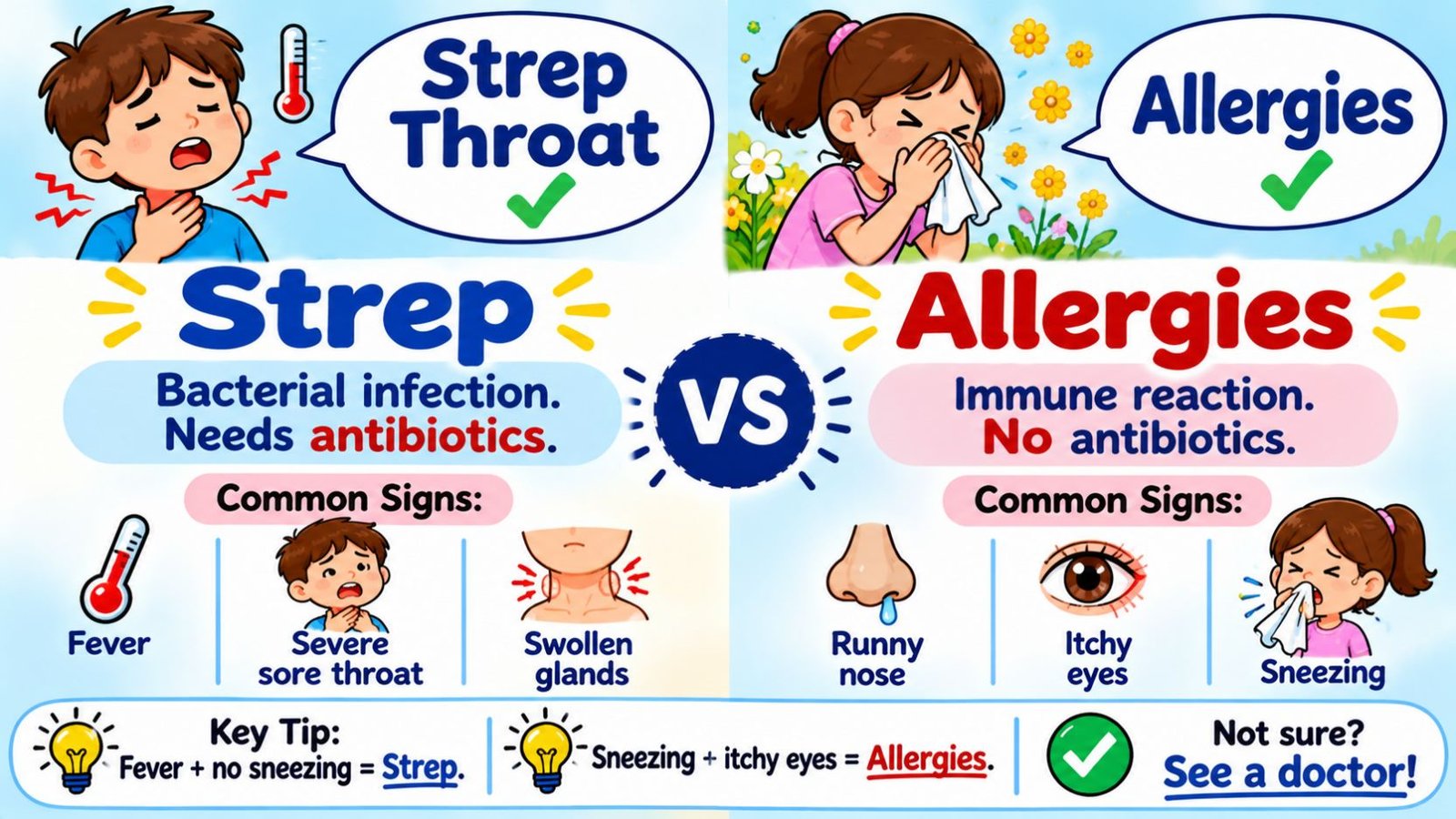
Strep throat is a bacterial infection that needs antibiotics. Allergies are an immune reaction to things like pollen, dust, or pet dander, and they do not need antibiotics. The easiest clue in the strep vs allergies question is itching and sneezing. Allergies cause them, and strep usually does not.
Both can make your throat hurt, which is why people mix them up. But they have different causes, different symptom patterns, and different treatments. Knowing the difference helps you decide whether to reach for an antihistamine or call a doctor. Strep also spreads to other people, and allergies never do.
Quick Answer: Strep Vs Allergies Side By Side
| Feature | Strep Throat | Allergies |
| Cause | Group A Streptococcus bacteria | Immune reaction to triggers like pollen, dust, mold, or pet dander |
| Fever | Common | Not caused by allergies |
| Sore throat | Sudden, severe, painful to swallow | Scratchy or irritated, often mild |
| Cough | Usually absent | Common, often from postnasal drip |
| Runny or stuffy nose | Usually absent | Very common |
| Sneezing | Uncommon | Very common |
| Itchy eyes, nose, or throat | Not typical | Very common |
| Swollen neck glands | Common and tender | Not typical |
| White patches on tonsils | Possible | No |
| Contagious | Yes | No |
| How long it lasts | A few days to a week, shorter with antibiotics | Weeks or months while exposed to the trigger |
| Treatment | Antibiotics, prescribed by a doctor | Antihistamines, nasal sprays, eye drops, avoiding triggers |
💡 Tip: If you have a fever and a very sore throat but no sneezing, itching, or runny nose, allergies are an unlikely cause.
Read More: Diverse Vs Divers: Meaning, Difference And How To Use Each Word
What Is Strep Throat?
Strep throat is an infection of the throat and tonsils. It is caused by bacteria called Group A Streptococcus, also known as Streptococcus pyogenes. It spreads through droplets from coughing and sneezing, and through close contact.
Strep is most common in children between about 5 and 15 years old. Adults get it too, especially parents and teachers who spend time around kids. According to the CDC, strep causes roughly 20 to 30 percent of sore throats in children and about 5 to 15 percent in adults. Most sore throats are caused by viruses, not strep.
Common Strep Throat Symptoms
Strep usually comes on quickly. Typical signs include:
- A sudden, painful sore throat
- Pain when swallowing
- Fever
- Red, swollen tonsils, sometimes with white patches or streaks of pus
- Tiny red spots on the roof of the mouth
- Swollen, tender lymph nodes in the neck
- Headache and body aches
- Stomach pain, nausea, or vomiting, mostly in children
Notice what is missing. Strep does not usually cause a runny nose, sneezing, hoarseness, or a strong cough. Those signs point more toward a virus or allergies.
What Does Strep Throat Look Like?
You can look in a mirror with a flashlight, but looks alone are not reliable. Strep often shows red, swollen tonsils.
You may see white or yellow patches, and small red dots on the soft palate. But viruses, including mono, can look almost the same. Only a test can confirm strep.
What Is A Strep Rash?
Some people with strep develop scarlet fever. This causes a fine, red, sandpaper like rash that often starts on the neck and chest and spreads. The face may look flushed, and the tongue may look red and bumpy. A rash with a sore throat and fever is a reason to see a doctor soon.
What Are Allergies?
Allergies happen when your immune system overreacts to something harmless, like pollen, dust mites, mold, or pet dander. Your body releases chemicals such as histamine. That causes itching, sneezing, mucus, and watery eyes.
Seasonal allergies, often called hay fever, flare up when certain plants release pollen. Year round allergies come from indoor triggers like dust mites, mold, or pets. Dog allergies and cat allergies are common examples of pet related allergies.
Common Allergy Symptoms
- Sneezing, often many times in a row
- Runny or stuffy nose with clear, thin mucus
- Itchy, watery, or red eyes
- Itchy nose, throat, or roof of the mouth
- Postnasal drip and a tickle in the throat
- Cough
- Fatigue
Allergies do not cause a true fever. If you have a temperature, something else is going on, such as an infection.
Can Allergies Cause A Sore Throat?
Yes. Allergies can cause a sore throat, but it feels different from strep. Mucus drips down the back of your throat, which is called postnasal drip. That irritates the tissue and causes a scratchy, raw, or tickly feeling. You may also clear your throat often or notice a mild cough.
An allergy sore throat is usually worse in the morning. It tends to improve during the day, and it comes with other allergy signs like sneezing and itchy eyes. Strep pain is usually sharper, and swallowing can hurt a lot.
What Does a Sore Throat from Allergies Look Like?
The throat may look mildly red. You may see a bit of mucus at the back of the throat, and sometimes the tissue looks bumpy. You will not usually see white patches of pus, and the tonsils are usually not badly swollen.
Can Allergies Cause Strep Throat?
No. Allergies cannot cause strep throat, because strep is caused by bacteria. Allergies do not turn into strep.
But the two can happen at the same time. Allergies can irritate your nose and throat, and that may make you feel run down. If your allergy symptoms suddenly change, and you develop a fever, severe throat pain, or swollen neck glands, think about a second problem like strep.
Can Allergies Cause A Fever?
No. Allergies on their own do not cause a fever. If you have a fever with allergy like symptoms, the cause may be a cold, flu, COVID 19, a sinus infection, or strep. A fever is one of the most useful clues for separating infection from allergies.
Read More: Fead Vs Feed: What Is The Real Difference And Is “Fead” Even A Word?
Strep vs Cold vs Allergies
A cold is the third common suspect. Colds are caused by viruses. They overlap with both strep and allergies, so a three way comparison helps.
| Symptom | Strep | Cold | Allergies |
| Start | Sudden | Gradual over a day or two | Starts when exposed to a trigger |
| Fever | Common | Sometimes low | No |
| Sore throat | Severe | Mild to moderate | Scratchy |
| Cough | Rare | Common | Common |
| Runny nose | Rare | Common, mucus may thicken | Common, mucus stays clear |
| Sneezing | Rare | Common | Very common |
| Itchy eyes | No | Rarely | Very common |
| Body aches | Common | Mild | No |
| Lasts | Days, shorter with treatment | About 7 to 10 days | Weeks, as long as you are exposed |
A cold usually gets better on its own within about a week to ten days. Allergies last as long as the trigger is around. Strep can improve without treatment, but it carries risks, so it should be tested and treated.
Strep Throat Vs Tonsillitis
Tonsillitis means your tonsils are swollen and inflamed. It is a description, not a single disease. Strep bacteria can cause tonsillitis, and so can many viruses.
So strep throat and tonsillitis can overlap. You can have tonsillitis from strep, or tonsillitis from a virus. A test tells you which one it is, and that matters because only the bacterial type needs antibiotics.
Strep Throat Vs Other Sore Throats
Most sore throats are not strep. Here is how common causes compare.
| Cause | Clues |
| Strep throat | Sudden onset, fever, no cough, swollen tender neck glands |
| Viral sore throat | Cough, runny nose, hoarse voice, mild fever |
| Allergies | Sneezing, itchy eyes, postnasal drip, no fever |
| Dry air or yelling | Scratchy throat that improves with fluids and rest |
| Mono | Extreme tiredness, long lasting sore throat, swollen glands |
Pink Eye Vs Allergies
This comes up often during allergy season. Allergic pink eye usually affects both eyes. The eyes are itchy, watery, and red, and you may also be sneezing. Bacterial pink eye often causes thicker yellow or green discharge, and eyelids may stick together. Allergic pink eye is not contagious. Bacterial and viral pink eye are.
Pink eye is also not a normal part of strep. If you have a sore throat, fever, and red eyes with a cough, a virus is more likely than strep.
How Do You Get Strep Throat?
Strep spreads in a few main ways:
- Breathing in droplets after an infected person coughs or sneezes
- Touching a surface with droplets, then touching your mouth, nose, or eyes
- Sharing cups, forks, or other items
- Close contact in schools, daycares, and homes
Symptoms usually appear about 2 to 5 days after exposure.
Is Strep Throat Contagious?
Yes. Strep throat is contagious, and it spreads easily in crowded settings. Allergies are not contagious, so you cannot give them to anyone.
The CDC says people with strep should stay home until the fever is gone and they have taken antibiotics for at least 12 hours. Starting treatment quickly helps protect others, too. You can lower the spread by washing hands often, covering coughs, and not sharing food or drinks.
How to Tell Strep vs Allergies: A Simple Checklist
Ask yourself these questions.
- Do you have a fever? If yes, think infection, not allergies.
- Is your nose itchy, runny, or full of sneezes? That points toward allergies.
- Are your eyes itchy and watery? Allergies are likely.
- Is swallowing very painful? Strep is more likely.
- Are the glands in your neck swollen and sore? Strep is more likely.
- Do you have a cough? A cough points away from strep.
- Did it start suddenly? Strep often does.
- Do symptoms return every year at the same time? Seasonal allergies are likely.
⚠️ Common mistake: Assuming a sore throat is allergies because it is spring. Allergies and strep can happen at the same time of year.
How Is Strep Throat Diagnosed?
A doctor or clinic uses a throat swab. The most common test is a rapid antigen test, which gives results in minutes. If it is negative but strep is still suspected, especially in a child, a throat culture may be sent to a lab for a more reliable result.
At Home Strep Tests
At home strep tests are available. They work like the rapid test used in clinics. They can be useful, but results are not perfect. A positive result is a good reason to call a doctor. A negative result does not fully rule out strep, especially in children, so follow up with a clinician if symptoms continue or you are worried.
Strep Throat Treatment
Strep is treated with antibiotics. Penicillin or amoxicillin is usually the first choice. Doctors use other antibiotics for people who are allergic to penicillin.
Key points:
- Take the full course, even if you feel better in a day or two
- Most people feel much better within 1 to 2 days of starting antibiotics
- Rest, fluids, and over the counter pain relievers can ease discomfort
- Throat lozenges, warm tea, and salt water gargles may help older children and adults
Without treatment, symptoms often fade in about 3 to 5 days. But untreated strep can lead to complications like rheumatic fever, kidney inflammation, or an abscess near the tonsils. This is why testing and treatment matter.
How Long Does Strep Throat Last?
With antibiotics, most people feel better within a day or two. Without antibiotics, symptoms usually last about a week. A strep infection does not go on for weeks the way allergies can.
Allergy Treatment And Relief
If your symptoms sound like allergies, these options may help:
- Antihistamines: Reduce sneezing, itching, and runny nose
- Nasal steroid sprays: Often the most effective option for nasal symptoms
- Allergy eye drops: Ease itchy, watery eyes
- Saline rinses: Help clear pollen and mucus from the nose
- Avoiding triggers: Keep windows closed on high pollen days, wash bedding often, and shower after being outdoors
- Air filtration: A HEPA air purifier may help reduce indoor allergens for some people
- Allergy testing and shots: An allergist can help if over the counter treatments are not enough
Ask a pharmacist or doctor which medicines are safe for you, especially for children, pregnancy, or if you take other medications.
When To See A Doctor
Contact a healthcare provider if you have:
- A sore throat with fever
- Severe throat pain or pain that lasts more than a couple of days
- White patches on the tonsils
- A rash with a sore throat
- Swollen, tender neck glands
- Close contact with someone who has strep
- Symptoms that keep getting worse
🚨 Seek emergency care right away for trouble breathing, trouble swallowing saliva, drooling, a swollen tongue or lips, or a stiff neck with fever. Throat or tongue swelling after eating, a sting, or a medicine can be a severe allergic reaction called anaphylaxis, and it is an emergency.
Read More: Encyclopedia Or Encyclopaedia: Which Spelling Is Correct?
Group B Strep Is Not the Same
Group B strep is a different bacterium. It is often carried in the gut or genital tract and does not cause strep throat. It matters mainly during pregnancy, because it can pass to newborns during delivery.
Pregnant women are routinely screened for it late in pregnancy. If you are searching for strep throat, you are looking for Group A strep.
Frequently Asked Questions
What is the difference between strep and allergies?
Strep is a bacterial infection that causes fever, severe sore throat, and swollen glands. Allergies are immune reactions that cause sneezing, itching, and a runny nose. Only strep is contagious.
Can allergies cause strep throat symptoms?
Allergies can cause a sore throat, but not true strep symptoms like fever or pus on the tonsils. They can seem similar because postnasal drip irritates the throat.
Can you have strep and allergies at the same time?
Yes. Having allergies does not protect you from strep, and the two can overlap. A sudden fever or severe throat pain during allergy season deserves a closer look.
Does strep throat cause a cough or runny nose?
Usually not. A cough, runny nose, or hoarse voice makes a virus or allergies more likely than strep.
Can allergies cause a fever?
No. A fever points to an infection or another illness.
Is strep throat contagious?
Yes. It spreads through droplets and close contact. People can usually return to school or work after the fever is gone and they have taken antibiotics for at least 12 hours.
How long does strep throat last?
With antibiotics, most people feel better in 1 to 2 days. Without treatment, it often lasts about a week.
What does a sore throat from allergies feel like?
It feels scratchy, tickly, or raw, often worse in the morning. It usually comes with sneezing, a stuffy nose, or itchy eyes.
What is the difference between tonsillitis and strep?
Tonsillitis is swollen, inflamed tonsils. Strep is one of several causes. Viruses cause most cases.
Can I test for strep at home?
Yes, at home tests exist. A positive result should be followed by a visit to a doctor. A negative result does not always rule out strep, so seek care if symptoms continue.
Conclusion
The strep vs allergies question comes down to a few clues. Strep brings a sudden, painful sore throat, fever, and swollen neck glands, and it is contagious. Allergies bring sneezing, itchy eyes, a runny nose, and a scratchy throat, with no fever and no risk of spreading to others.
If you are unsure, trust the pattern and get tested when strep is possible. A quick throat swab gives a clear answer and prevents complications. When allergies are the cause, simple steps like avoiding triggers and using the right medicines can bring steady relief.

Zunaira Qasim is the author and creator of Gramvixo, dedicated to making English grammar easier for learners and everyday writers. With 4 years of experience researching grammar, confusing words, word choices, and common language mistakes, they create clear and practical content that helps readers understand English and use it with confidence.